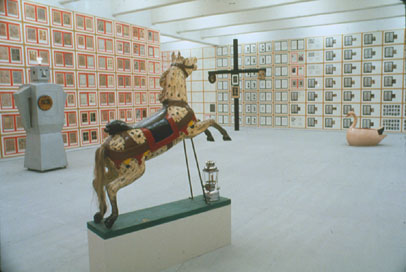
I had noted from my trip research for a new group I'm working with how Tate Liverpool seems to have increased its exhibition entries of late. The "Left of Centre" exhibition was listed at £8 for adults and £6 concession. I am naturally stingy and also a product of an upbringing where galleries and art events were highly subsidised and thus free. I have very often reached the top floor of the Tate, found it to be a paid entry, turned around and returned to the free floors.Today I had decided to bite the bullet and pay to go into the exhibition which I was keen to see.
Much to my initial delight the poster on the door declared that I could pay only what I could afford. This however was not as simple as my first impressions suggested. How was I going to, one, come to a conclusion on what the exhibition was really worth having not yet seen it and two ascertain what I could afford.
The first of the conundrums was fairly easy to put a sensible logic in place for. I had been discussing with my boyfriend and fellow artists the new trend for high priced exhibition entry fees (I'm sure there is a whole other discussion around our current governments ideological cuts which might make these charges a new necessity but I shall leave that for another day) . We had talked through if seeing art should be free and come to the conclusion that if it is art owned publicly we as the "Public" should be entitled to see it for free. I would not pay an extra fee to wear a pair of shoes I already own or pay to stroke the cat I pay to sustain. I am not arguing that Art has much in common with a cat or shoes. These examples are in fact weak in comparison if we add the ideas around seeing art being a higher enriching activity than wearing shoes or stroking a cat. So to ascertain how much of the exhibitions art I should pay to see I could simple ask how much was in public ownership, owned by The Tate and other publicly subsidised and regulated bodies and how much had been hired in from private collections? The staff on the counter were very helpful with this and knew that around 40% of the art was owned by the Tate and by proxy me. Taking into account any other grants, funds etc which the exhibition probably attracted it seemed fair to round it up to 50% and thus pay half of the entry fee.
The second question of how much we can afford to pay for any given thing is hard to determine these days. In the past being poor in this country meant having a pot of physical cash which you would spend each week. If times got tough you might find a shop keeper who would extend you credit but on the whole you could visualise exactly what you could afford. If once the necessities were bought you might have enough for a pint or a trip to the local flea pit cinema. Bigger windfalls might secure you an item to make your life easier or more luxurious. I'm not indicating that the past was full of all sensible souls who always lived according to their means or that changes to income couldn't blow a budget out of the water only that the physicality of cash in each week made it easier to determine what one could afford and people had a less abstract idea of their budgets. I work as a freelance artist, my income is unpredictable. Each time the government make a "Welfare Reform" the amount of working tax credit which subsidies my 40-70 hour working week goes down. Maybe those with a set salary would find it easier to ascertain an answer to the puzzle of pay what they can afford but in uncertain times I expect even those on large salaries might wonder "If I pay it today will it affect what I have tomorrow". What I think I can afford to pay is probably more directly influenced by my feelings of optimism or pessimism about the future than it is about the cash I actually have in my pocket or can access through my bank. In the interests of alleviate the growing que growing behind me I decide not to consider any of these deeper issues just then and pay my £4.00. The ticket lady tells me that most people pay £5.00 but lots have paid over the asking price too. I throw in a theory from a book called "The Undercover Economist" about how much people are willing to pay and as the ticket is handed to me sense my time at the till is up and ascend the stairs to the exhibition.
The exhibition is good although if you are short sighted take your readers as it takes a lot of studying to understand what is going on in most of it. Sorry, art speak, to understand the wider context of the art work and its sociological placement in left wing theory.
But this little story of commerce distortion didn't end there. In the Tate Shop there was a table. On the table were a collection of books and items of varying interest to me. In the middle stood a sign. It read "Pay what you can afford, this table only" . Oh no I hear you cry. I was once again in a quandary that led me to needing a break and a cup of tea. There were three items of interest on the table; a book on African Art and its place in modernism, one on the works of Michael Landy and Jean Tinguely and a strange intriguing lace choker. The choker was doubly intriguing as it had a perplexing price tag on it. You can see it in this picture.

It didn't appear to be worth this amount but how could I offer an amount closer to what I could afford, somewhere near to £1.00, for something that was once valued at over £100. With a value like that it must have been woven by golden spiders and sown by mystical fairy folk. I could justify a low cost on the books. My book collection often acts as a catalyst for other creative souls in workshops and such like and if knowledge is power I feel entitled to some on the cheap. I decided to offer £5.00 for the two books.
The lady at the counter told me that was a very generous offer as others had taken 15 items and paid a pound. I told her about the choker and she encouraged me to take it within the £5.00 deal " "Somebody will only take it for 10p " she said.
I have been pondering on the difference between the often inflated prices people would pay to see the exhibition compared to the consistently lower prices they would offer for the objects. Both a book and an exhibition could bring you equal pleasure. Thus far we have two theories. My own is that there is a need to fill a Sunday with meaningful activity akin to the need to eat dinner. We will, when we have to, pay to have our time filled, be it a subscription to sky, tickets to a football match or entry to an exhibition. Entertainment, enrichment they are needs. The items on the table whilst some of them could while away time, entertain and enrich are seen as objects which we may want but don't necessarily need. We don't need them, maybe some people will get home and realise that they don't even want them. We will take them despite this but only if they are almost free. My Boyfriends theory is that people are so used to gallery shops being overpriced that they consider hoovering up lots of their produce at next to nothing as a kind of right. There are no doubt 101 other theories and it would be good to hear any in the comments section below this post.
On the way home I evolved another idea for an essay I would like to write entitled;
"Why the funding officers shape our world". I am however not subsidised and so, if you want me to write it maybe you could make me an offer, only what you can afford of course.